


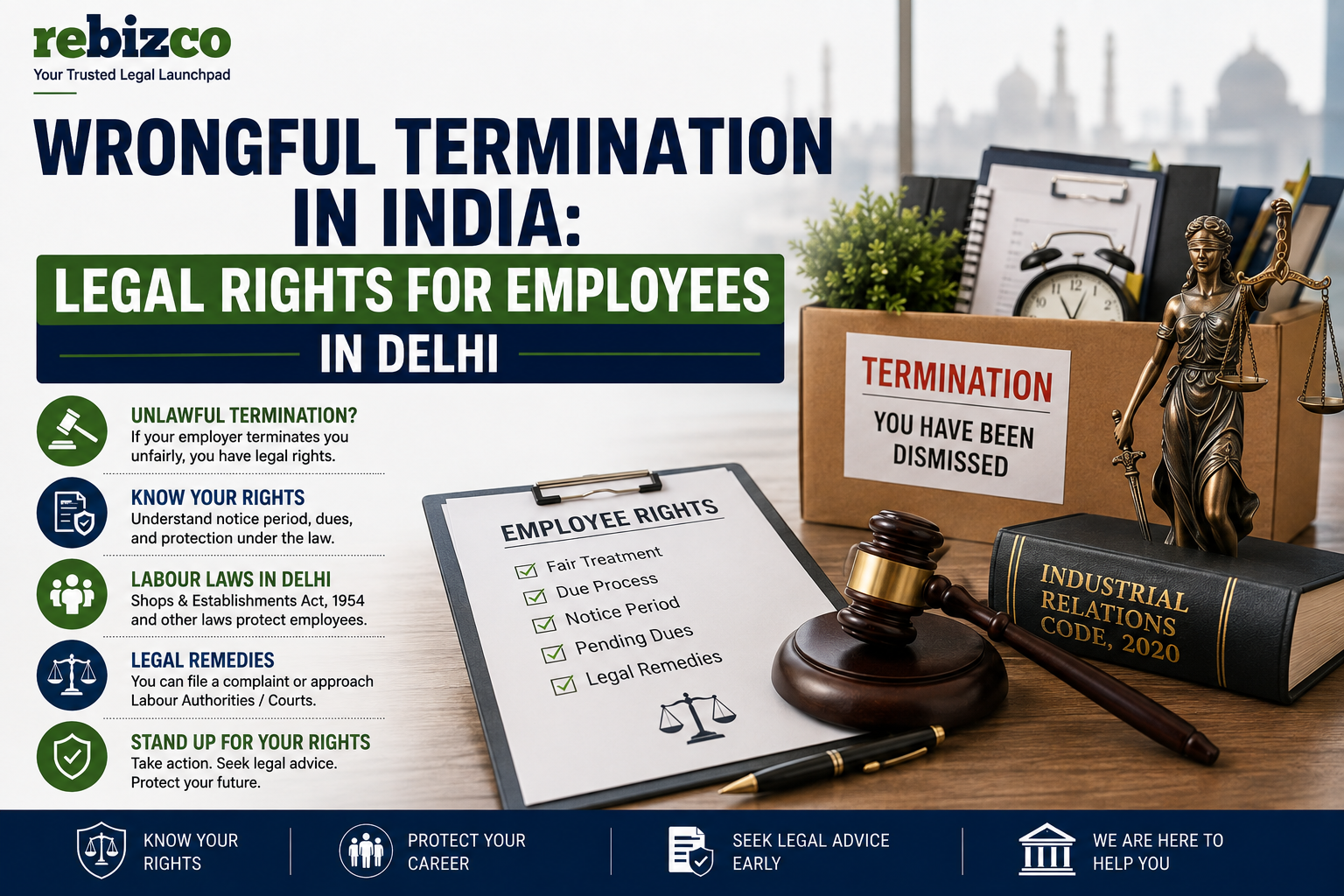
Losing a job can create stress and financial problems. However, an employer cannot always end employment without following legal rules. Employees in Delhi should understand their rights before accepting a termination decision.
Employment laws can vary based on the employee’s role and workplace. The employment contract can also affect the employee’s rights. Labour laws may provide additional protection in some cases.
If you believe your employer terminated you unfairly, take the matter seriously. Keep your documents and understand your legal options before taking action.
What Is Wrongful Termination?
Wrongful termination happens when an employer ends employment in violation of an applicable law or contract.
An employer may have a valid reason to terminate an employee. However, the employer must follow the rules that apply to the situation.
For example, an employer may terminate an employee for misconduct. The employer may also terminate employment because of poor performance or business reasons. Each situation requires a different legal analysis.
A termination can become unlawful when the employer ignores a mandatory requirement. The employment contract may also create specific obligations for the employer.
Therefore, employees should not assume that every termination is legal. They should first examine the reason and process behind the decision.
What Does Indian Law Say About Employee Termination?
India has several laws that deal with employment and labour matters. The applicable law depends on the employee’s position and workplace.
The Industrial Relations Code, 2020 now forms an important part of India’s industrial relations framework. It covers matters such as industrial disputes, retrenchment, and related employment issues.
Delhi also has specific rules for certain shops and commercial establishments. The Delhi Shops and Establishments Act, 1954 contains provisions related to termination of employees.
However, one rule does not apply to every employee. The employee’s role and workplace matter.
Can an Employer Terminate an Employee Without Notice?
An employer cannot always terminate an employee without notice.
The employment contract may contain a notice period. The applicable labour law may also require notice or payment instead of notice.
For certain employees covered by the Delhi Shops and Establishments Act, Section 30 provides a notice requirement after three months of continuous employment. The employer generally needs to give one month’s notice or wages instead of notice.
The law also provides an exception for misconduct. In such cases, the employer must give the employee an opportunity to explain the charges.
Therefore, employees should check their contract and applicable law before challenging termination.
Common Reasons Behind Wrongful Termination Claims
Employees can raise termination disputes for many reasons.
One common issue involves termination without the required notice. Another issue involves unpaid salary or other employment dues.
Some employees face termination after raising complaints about workplace issues. Others may face dismissal after reporting misconduct or exercising a legal right.
A termination dispute can also arise when an employer forces an employee to resign. In such cases, the employee should keep evidence of the communication.
Poor performance can also create disputes. An employer may have concerns about performance, but the employee may disagree with the allegations.
The facts matter in every case. Employees should collect documents before making legal claims.
Employee Rights After Termination
Employees have certain rights after their employer ends their employment. These rights depend on the contract and applicable laws.
First, employees should receive the salary that they have earned. They should also check other pending payments.
Employees should keep their termination letter. They should also save important emails and messages from the employer.
An employee can ask the employer to explain the reason for termination. The employee can also ask for relevant employment documents.
If the termination violates an applicable law, the employee may seek a legal remedy.
Understanding job termination legal rights India can help employees decide what to do next.
Wrongful Termination in Delhi
Delhi has specific employment rules for certain establishments.
The Delhi Shops and Establishments Act, 1954 regulates several employment matters. The Delhi Labour Department lists the Act among the laws that govern employment conditions.
Section 30 deals with termination in certain establishments. It provides notice protection for eligible employees who meet the required period of service.
However, this protection does not cover every employee in Delhi.
For example, an employee’s designation can affect the available remedy. The nature of the establishment can also matter.
Therefore, an employee should identify the correct law before filing a complaint.
What Is Illegal Termination?
Illegal termination occurs when an employer violates a legal requirement while ending employment.
The employer may ignore a required notice period. The employer may also fail to follow an applicable disciplinary procedure.
Another issue can arise when an employer terminates an employee for a reason that violates a specific legal protection.
Employees should also check their employment contracts. A contract may contain important terms about termination and notice.
The phrase illegal termination Delhi employee covers many different situations. The exact facts decide whether a legal violation occurred.
What Is Retrenchment?
Retrenchment has a specific meaning under labour law. It does not cover every type of termination.
The Industrial Relations Code, 2020 contains provisions related to retrenchment. It also provides rules for certain establishments and workers.
An employer must follow the applicable requirements before retrenching an eligible worker.
These requirements can include notice and other statutory obligations. Some establishments may also need additional approval under the law.
Therefore, employees should check whether their termination qualifies as retrenchment.
What Should You Do After Wrongful Termination?
Do not rush into a legal dispute without collecting your records.
Start by saving your employment documents. Keep your appointment letter and employment contract.
Next, save your termination letter. Keep emails, messages, and other communications about your job.
Then, check your notice period. Compare the contract terms with the employer’s action.
Also, check your salary records. Make a list of unpaid salary and other pending amounts.
Steps to Take
- Save your employment contract. Keep a copy of your appointment letter and contract.
- Keep the termination letter. Save the original email or written notice.
- Collect salary records. Keep salary slips and relevant bank statements.
- Save important communication. Keep emails, messages, and notices from your employer.
- Check the notice period. Read the termination clause in your contract.
- Record the reason for termination. Write down what the employer told you.
- Preserve performance records. Keep appraisal reports and performance reviews.
- Seek legal advice. Ask a lawyer to review your documents.
Can You Sue Your Employer for Termination?
An employee may have a legal remedy against an employer. However, the correct legal route depends on the employee’s status.
Workers covered by labour laws can use the dispute resolution mechanisms available under those laws. The Industrial Relations Code provides processes for industrial disputes.
The Delhi Labour Department also provides services for labour disputes. These services include conciliation and dispute resolution.
Therefore, do not assume that a civil court is always the right forum.
A lawyer can examine your employment status and documents. The lawyer can then suggest the appropriate legal forum.
How to File a Termination Complaint in Delhi
Employees can approach the Delhi Labour Department in suitable cases.
The department handles various employment complaints. These include certain disputes involving termination and unpaid wages.
Employees should prepare their documents before filing a complaint.
Keep your appointment letter and termination notice ready. Also keep salary records and relevant communication.
The complaint should clearly explain what happened. It should also mention the relief you want.
The correct process can depend on the employee’s role and the nature of the dispute.
What Evidence Can Support Your Claim?
Documents can play an important role in an employment dispute.
Start with your appointment letter. It can show your job title, salary, and notice period.
Next, collect your salary slips. Bank records can also help establish salary payments.
Emails can show conversations with your employer. Performance reviews can also help explain your work history.
If the employer accused you of misconduct, keep the related notices. Also keep your written response.
Do not change or create documents. Use genuine records to support your claim.
What Remedies Can an Employee Seek?
The remedy depends on the facts of the case.
An employee may claim unpaid salary or other lawful dues. The employee may also claim notice pay when the law or contract requires it.
Eligible workers may seek other remedies under applicable labour laws. These remedies can include compensation or reinstatement in suitable cases.
The Industrial Relations Code gives the relevant tribunal powers to provide appropriate relief in certain dismissal disputes.
A lawyer can assess your case and explain the available options.
How Can Employees Protect Their Rights?
Employees should understand their employment contract from the beginning.
Read the termination clause before joining a company. Check the notice period and other important conditions.
Keep copies of important employment records. Do not depend only on company systems for old documents.
Also, respond to disciplinary notices on time. Keep a copy of every response you submit.
If an employer threatens termination, seek advice early. Early legal guidance can help you understand your position.
When Should You Contact a Lawyer?
You should consider legal advice when the termination creates a serious dispute.
Contact a lawyer if your employer refuses to pay your dues. You should also seek advice if the employer ignores the required notice period.
Legal advice can also help when the employer alleges misconduct. The same applies when the employer forces you to resign.
A lawyer can review the employment contract and termination letter. The lawyer can then explain your available remedies.
Conclusion
Wrongful termination can affect your income and career. However, every termination does not automatically become illegal.
The law depends on several factors. These include your job role, employment contract, workplace, and reason for termination.
Employees searching for wrongful termination India law should first identify the rules that apply to their job.
Employees in Delhi should also check the specific protections that may apply to their workplace. The Delhi Shops and Establishments Act provides termination-related provisions for certain employees.
If you face employee dismissal law India issues, keep your documents safe. Do not sign a settlement without understanding its terms.
You may also need legal advice before deciding to sue employer India termination disputes. The correct legal forum depends on your employment status and the facts.
Most importantly, act quickly and keep proper records. Good documentation can help you understand and protect your legal rights.