


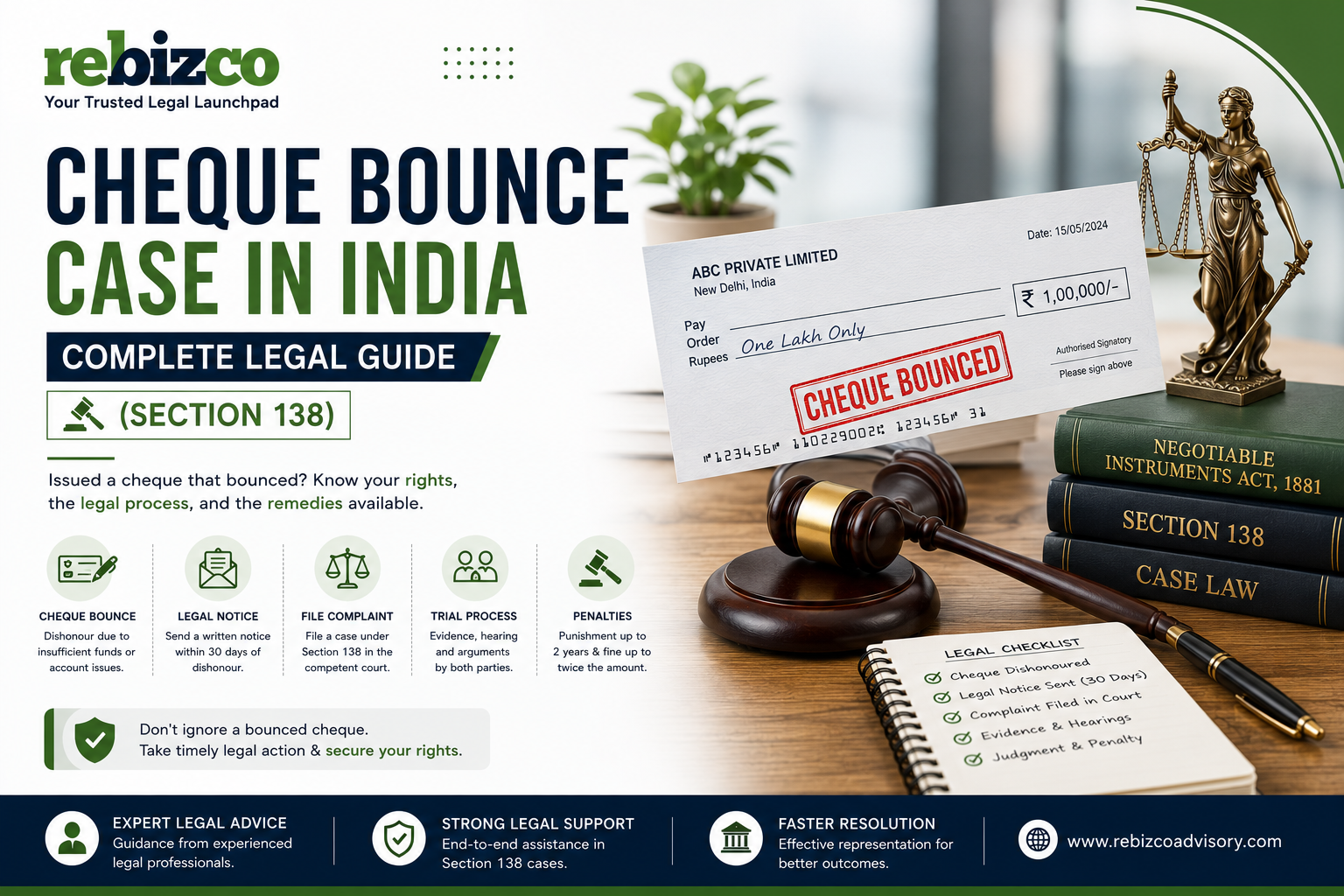
Cheque bounce issues create serious legal problems in India. Many individuals and businesses still rely on cheques for payments, so disputes arise frequently. Therefore, the law provides a clear system to handle such cases under the Negotiable Instruments Act, 1881. In this guide, you will understand the meaning, legal process, and penalties in simple language.
What is Cheque Bounce Case India Process?
The cheque bounce case India process starts when a bank refuses to honour a cheque. This usually happens due to insufficient funds, incorrect details, or account-related issues.
Once the cheque bounces, the payee gets a legal right to recover the amount. However, you must follow a proper legal procedure. If you skip any step, the court may reject your case. Therefore, understanding the process becomes essential before taking action.
Section 138 NI Act India: Legal Meaning
The section 138 NI Act India defines cheque bounce as a criminal offence when specific conditions are met. This law protects the credibility of cheque transactions in the country.
To apply Section 138, the cheque must be issued for a legally valid debt. The bank must return it unpaid, and the payee must send a legal notice within the prescribed time. If the drawer still fails to pay, the law allows criminal proceedings.
As a result, this section ensures accountability in financial dealings and discourages misuse of cheques.
Reasons Behind Cheque Dishonour Delhi Case
A cheque dishonour Delhi case or similar case can arise due to multiple reasons. Banks clearly mention the cause of dishonour in the return memo.
The most common reason is insufficient funds. However, signature mismatch, overwriting, or account closure can also lead to cheque bounce. Sometimes, the drawer may even stop payment intentionally.
Although reasons may differ, the legal consequences remain serious in most situations. Therefore, both parties must handle cheque transactions carefully.
Legal Notice Cheque Bounce India: Mandatory Step
The legal notice cheque bounce India stage plays a crucial role in the entire process. Without sending a proper notice, you cannot proceed with a legal case.
The payee must send a written notice within 30 days from the date of cheque return. This notice should include cheque details, the reason for dishonour, and a demand for payment.
After receiving the notice, the drawer gets 15 days to clear the dues. If payment is made within this period, the matter ends. Otherwise, the complainant can move to court.
Filing a Cheque Bounce Case in Court
After the notice period ends, the complainant can file a case before a Magistrate. The court then reviews the complaint and supporting documents.
Once the court accepts the case, it issues summons to the accused. The accused must appear and respond to the allegations. Both parties then present their arguments and evidence.
The judge evaluates the facts carefully and delivers a judgment. This structured approach ensures fairness and efficiency in the cheque bounce case India process.
Cheque Bounce Penalty India Explained
The cheque bounce penalty India can be severe if the accused is found guilty. The law aims to prevent financial fraud and protect trust in cheque transactions.
The court may impose imprisonment of up to two years. It may also order a fine that can go up to twice the cheque amount. In some cases, the court may impose both punishment and fine together.
Additionally, courts often direct the accused to compensate the complainant. Therefore, cheque bounce cases carry serious legal and financial consequences.
Timeline of Cheque Bounce Cases
Cheque bounce cases follow a time-bound legal process. However, the duration may vary depending on the court and complexity of the case.
The legal notice must be sent within 30 days. The drawer gets 15 days to respond. After that, the complainant has 30 days to file the case.
Court proceedings usually take 6 months to 2 years. Faster resolution depends on proper documentation and timely action. Therefore, following deadlines is very important.
Documents Required for Filing Case
Proper documentation plays a key role in winning a cheque bounce case. The court relies heavily on written evidence.
You must submit the original cheque, bank return memo, copy of legal notice, and proof of delivery. In addition, supporting documents like agreements or invoices strengthen your case.
Accurate and complete documents improve your chances of success and speed up the legal process.
Defenses Available to the Accused
The accused can defend themselves using valid legal grounds. Courts carefully examine both sides before making a decision.
For example, the accused may claim that no legal debt exists. They may argue that the cheque was issued as security or that payment has already been made.
Sometimes, the accused may challenge the validity of the legal notice. Therefore, each case depends on facts, evidence, and legal arguments.
How to Avoid Cheque Bounce Issues
Avoiding cheque bounce problems is always better than facing legal action. Simple precautions can prevent major disputes.
Always maintain sufficient balance before issuing a cheque. Check all details carefully before signing. Keep proper records of transactions.
Moreover, using digital payment methods can reduce risks. These steps help maintain trust and avoid unnecessary legal trouble.
Conclusion
Cheque bounce cases affect both individuals and businesses in India. The law under section 138 NI Act India provides a strong framework to deal with such issues.
Understanding the cheque bounce case India process helps you take timely and correct action. Sending a proper legal notice cheque bounce India ensures your case remains valid.
In conclusion, awareness of legal rights and responsibilities can make a big difference. Whether you are filing a complaint or defending a case, proper knowledge helps you handle the situation effectively.