

An experience letter is an important document that confirms an employee’s work history. It can help when applying for a new job, proving previous employment, or completing background verification.
Sometimes an employer refuses to provide an experience letter after an employee leaves the organisation. This situation can create problems, especially when a new employer asks for proof of previous employment.
The law does not provide one universal rule that requires every employer in India to issue an experience letter in every situation. The employee’s contract, company policy, applicable labour laws, employment category, and circumstances of the exit can all matter.
If you are facing an experience letter issue India, you should first understand your employment documents and the reason for the employer’s refusal.
What Is an Experience Letter?
An experience letter is a document that confirms an employee’s association with an organisation.
It usually mentions the employee’s name, designation, employment period, and sometimes the nature of work. The format can vary between companies.
An experience letter differs from a relieving letter. An experience letter generally confirms employment experience, while a relieving letter usually confirms that the employee has been formally released from employment.
Some employers provide both documents together. Others issue them separately.
Is an Experience Letter Legally Mandatory in India?
There is no single central law that automatically requires every employer to issue an experience letter to every employee.
However, the employee may have a contractual or company-policy right to receive employment documents after completing the required exit formalities.
Certain industries and state-specific employment laws may also contain requirements concerning service certificates or similar employment records.
Therefore, an employee should not assume that the absence of one specific law means an employer can always refuse the document.
The employment contract and applicable rules should be examined first.
Experience Letter vs Relieving Letter
Employees often use these terms interchangeably, but they can serve different purposes.
An experience letter generally confirms the employee’s work experience. It may state the period of employment and the position held.
A relieving letter usually confirms that the employee has completed the required exit process and that the employer has released the employee from their duties.
A new employer may ask for one or both documents during background verification.
If your previous employer has provided one document but not the other, check your company’s exit policy and employment contract.
Why Is an Experience Letter Important?
An experience letter can help establish your previous employment history.
A future employer may use it to verify your job title and employment period. It can also help explain gaps or transitions in your career.
An experience letter can become particularly important when a new employer requires formal proof of previous work experience.
Employees should therefore request the document before or immediately after completing their exit formalities.
Why Might an Employer Refuse an Experience Letter?
An employer may refuse or delay an experience letter for different reasons.
The company may claim that exit formalities remain incomplete. It may also raise an issue concerning company property, notice period, pending documents, or an internal dispute.
Sometimes the refusal may simply result from an administrative delay.
An employee should ask the employer for the reason in writing. This can help determine whether the refusal has a legitimate basis or whether the company is unnecessarily withholding the document.
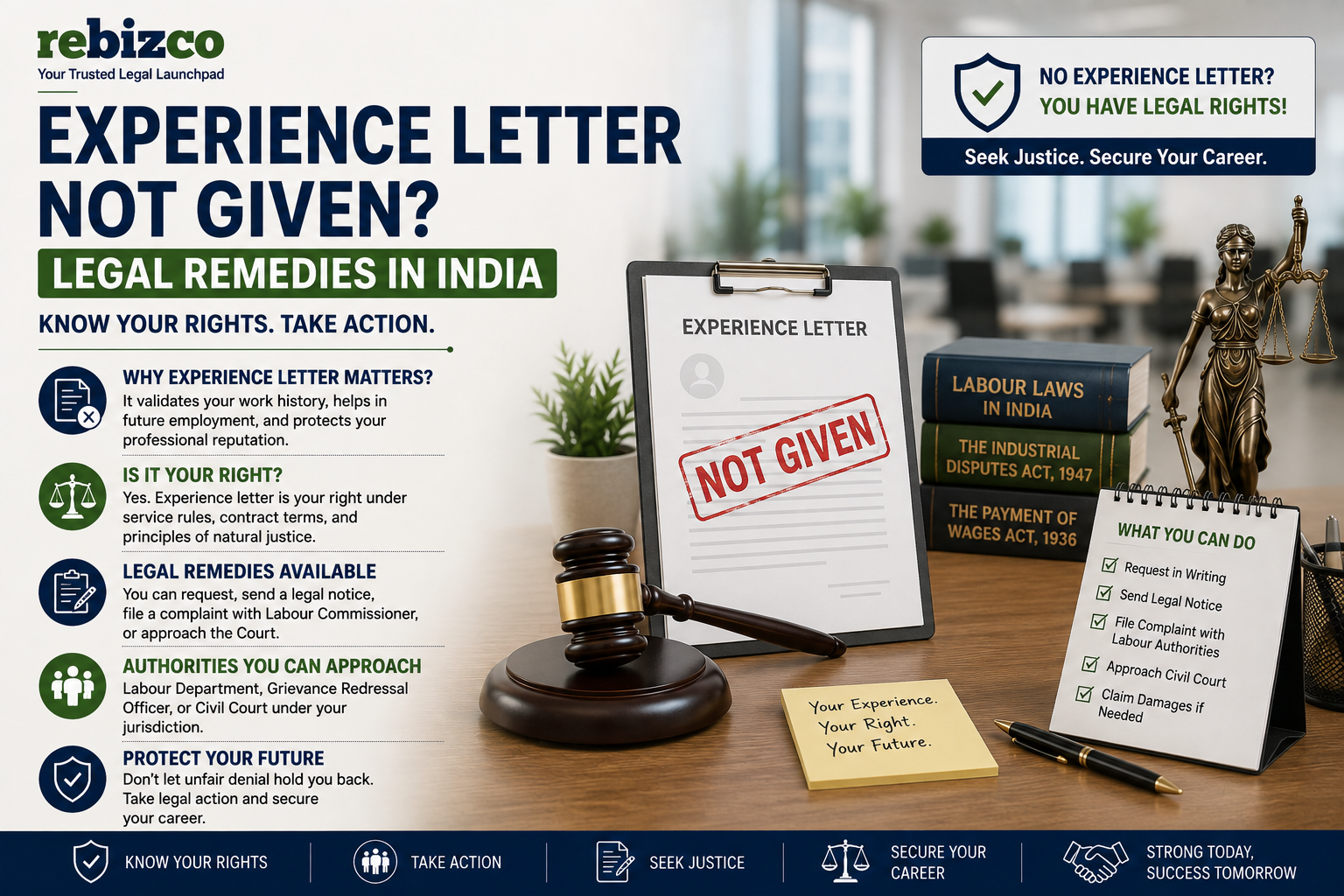
What Can You Do If Your Employer Does Not Give an Experience Letter?
Employees should start with a written request.
Send an email to HR or the appropriate manager. Mention your employment period, designation, last working day, and the documents you need.
If the employer does not respond, send a formal reminder.
Keep copies of all communication. Written records can become useful if you later need to approach an authority or seek legal advice.
Steps to Request an Experience Letter
A clear and professional request can often resolve the issue without legal proceedings.
Steps to Follow
- Check your employment contract: Look for clauses about exit documents and final settlement.
- Review company policy: Check the HR or employee handbook for experience and relieving letter procedures.
- Send a written request: Email HR and clearly request the experience letter.
- Mention your employment details: Include your designation, joining date, and last working date.
- Complete pending formalities: Return company property and complete any legitimate exit requirements.
- Send a reminder: Follow up if HR does not respond within a reasonable period.
- Send a formal legal notice if necessary: Consider legal advice if the employer continues to refuse the document without a valid reason.
- Approach the appropriate authority: Depending on your employment category and dispute, you may have access to a labour authority or other legal remedy.
Can an Employer Withhold an Experience Letter Because of Notice Period?
Notice-period disputes can sometimes create problems during an employee’s exit.
For example, an employer may claim that the employee left without completing the contractual notice period.
The consequences depend on the employment contract and applicable law. A notice-period dispute does not automatically answer whether the employer can withhold every employment document.
The employee should ask the employer to explain the issue in writing.
If the employer has a legitimate contractual claim, the employee may need to resolve that dispute separately from the request for employment records.
Can an Employer Refuse a Relieving Letter?
A relieving letter can be important for future employment.
Whether an employer must issue one depends on the applicable contract, company policy, employment rules, and circumstances of the employee’s exit.
If an employee completed the required notice period and exit formalities, the employee can make a written request for the relieving letter.
If the employer refuses without explaining the reason, the employee can consider sending a formal demand.
The employee should preserve proof of resignation, notice completion, handover, and final settlement.
Experience Letter Issue in Delhi
Employees in Delhi can consider approaching the Labour Department when their dispute falls within its jurisdiction.
The Delhi Labour Department provides grievance mechanisms for various employment and labour-law complaints. It also operates district-level labour offices.
However, not every experience-letter dispute automatically falls within the Labour Department’s jurisdiction.
The employee’s status and the nature of the employment relationship can affect the available remedy.
People searching for an employer not giving experience letter Delhi solution should therefore first determine which authority can legally handle their particular dispute.
Can You Send a Legal Notice to Your Employer?
Yes, an employee can consider sending a legal notice when an employer refuses to provide an employment document without a valid reason.
A legal notice can formally communicate the employee’s demand and give the employer an opportunity to resolve the issue.
The notice should contain accurate information. It should identify the employment period, document requested, relevant contractual terms, and the action expected from the employer.
A lawyer can draft the notice after reviewing the employee’s documents and circumstances.
Sending a legal notice does not automatically mean that a court case will follow. Many employment disputes can still settle after formal communication.
What Evidence Should You Keep?
Documentation is important when dealing with an employment dispute.
Keep your appointment letter, salary slips, resignation email, acceptance of resignation, and final settlement documents.
Also preserve emails and messages relating to your experience or relieving letter.
If you completed a notice period or handover, keep proof of that as well.
These documents can help establish the facts if the employer later disputes your employment history.
Can You Prove Employment Without an Experience Letter?
Yes, an experience letter is not the only document that can establish employment.
Other records can show your employment relationship and work period.
These may include an appointment letter, salary slips, bank statements showing salary payments, employee ID records, tax documents, PF records, and official emails.
A new employer may accept alternative evidence depending on its verification requirements.
If your previous employer refuses an experience letter, explain the situation to the new employer and provide genuine supporting documents.
What If the Employer Gives a Negative Experience Letter?
An employer should provide accurate employment information.
An employee who believes an employer has deliberately provided false or misleading information may need to examine the facts carefully.
Keep a copy of the document and any communication connected with it.
Depending on the circumstances, an employee may have contractual, civil, employment, or other legal remedies.
Professional legal advice can help determine which option applies.
Can an Employer Hold Salary Because You Ask for an Experience Letter?
An employer cannot automatically withhold earned wages simply because an employee requests an experience letter.
Wage payments and deductions are governed by applicable law. The Code on Wages, 2019 contains rules concerning payment of wages and permitted deductions.
Employees should ask for a written explanation if an employer withholds salary or makes an unexpected deduction.
A salary dispute and an experience-letter dispute may require separate legal analysis.
What About Final Settlement?
Employees should complete their final settlement carefully.
The settlement may include pending salary and other amounts that the employee has legally earned.
The employee should check the calculation before accepting it.
Keep the final settlement statement and proof of payment.
If the employer has not cleared lawful dues, the employee may have separate remedies for salary recovery.
Can an Experience Letter Dispute Affect a New Job?
A missing experience letter can sometimes create problems during background verification.
However, employees can often provide alternative proof of employment.
Explain the situation to the prospective employer rather than providing inaccurate information.
You can provide genuine documents such as appointment letters, salary slips, bank statements, or official emails.
If the new employer requires a specific document, ask whether it will accept alternative proof.
Benefits of Taking Action
Taking timely action can help employees protect their employment records and career interests.
Key Benefits
- Creates a formal record: Written communication proves that you requested the document.
- Helps resolve the dispute: A clear request may encourage HR to issue the document.
- Protects your employment history: Supporting documents can establish your previous work experience.
- Supports legal action: Records can help a lawyer or authority understand the dispute.
- Helps with future employment: Proper employment documents can make background verification easier.
How to Avoid Experience Letter Problems
Employees can reduce the risk of an exit-document dispute by keeping their employment records from the beginning.
Save your appointment letter and salary slips. Keep copies of important HR communication.
Before resigning, check your company’s exit policy. Understand the notice period, handover requirements, and final settlement process.
After completing the exit process, request the experience and relieving letters in writing.
Do not rely only on verbal assurances from HR.
What If Your Employer Does Not Respond?
Start with a polite reminder. Give the employer reasonable time to respond.
If HR continues to ignore your requests, send a formal letter or email.
Mention the dates of your earlier requests and clearly state which document you need.
If the employer still refuses to respond, consider legal advice. A lawyer can examine your employment contract and determine whether you have a contractual or statutory remedy.
Employee Rights Regarding Employment Documents
Employees should maintain copies of important employment records.
These documents can help prove employment, salary, designation, and the terms of the working relationship.
Employees should also receive accurate information about their employment where applicable.
If an employer refuses to provide a document that the employee has a contractual or legal right to receive, the employee may be able to seek a remedy.
The specific remedy depends on the employee’s category and the applicable law.
Conclusion
An experience letter can play an important role in an employee’s career. It can help prove employment history and support future job applications.
However, there is no single rule that automatically requires every employer in India to issue an experience letter in every situation. The employee’s contract, company policy, employment category, and applicable law can determine the available rights and remedies.
If you are facing an experience letter issue India, begin by checking your employment documents and sending a written request to HR.
Employees dealing with an employer not giving experience letter Delhi issue can also explore the Delhi Labour Department’s grievance mechanisms when the matter falls within its jurisdiction.
A missing document does not necessarily mean that you cannot prove your previous employment. Appointment letters, salary slips, bank records, PF records, and official communication can also provide useful evidence.
If your employer refuses to issue an experience or relieving letter without a valid explanation, consider professional legal advice. A lawyer can review your documents and help you understand the appropriate remedy.