


Introduction
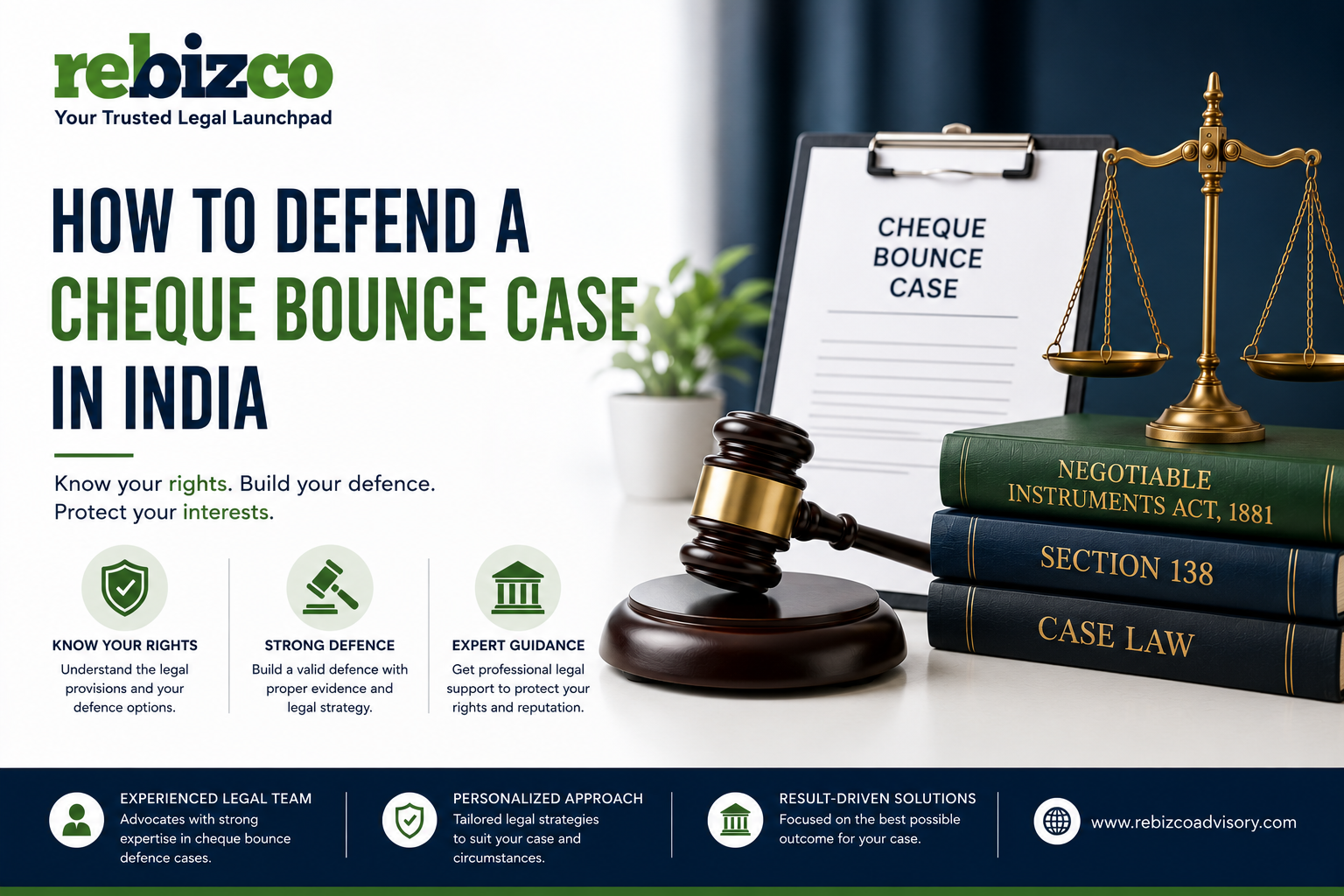
Facing a cheque bounce case can feel stressful; however, the law provides several ways to defend yourself. If someone files a case against you under Section 138 of the Negotiable Instruments Act, you still have legal rights and valid defenses. This guide explains cheque bounce defence India in a simple, practical way so that you can understand your options and respond effectively.
Understanding Section 138 Cases
A cheque bounce case arises when a cheque issued by you gets dishonoured due to insufficient funds or other reasons. After that, the payee sends a legal notice and may file a complaint if payment is not made within the given time.
However, not every cheque bounce leads to conviction. Courts examine facts carefully. Therefore, if you have a valid reason, you can present your defence and protect yourself.
Legal Framework for Defence
The law governing these cases is the Negotiable Instruments Act, 1881. Under section 138 defence Delhi, the accused has the right to challenge the complaint on legal and factual grounds.
Although the law presumes that the cheque was issued for a valid debt, this presumption is not final. You can rebut it by presenting evidence, witnesses, or circumstances that support your case.
Key Defence Strategies
No Legally Enforceable Debt
One of the strongest defences is proving that no legal debt existed. For example, if the cheque was given as a gift, security, or for an illegal transaction, the case may fail. Courts require proof that the cheque was issued for a valid and enforceable liability.
Cheque Issued as Security
In many cases, cheques are given as security for loans or agreements. If you can prove that the cheque was not meant for immediate payment, it can weaken the complainant’s case. Courts often consider this defence carefully.
Signature or Cheque Dispute
If the signature on the cheque is forged or altered, you can challenge its validity. Similarly, if the cheque details were filled without your consent, you can raise this issue during trial.
Improper Legal Notice
The complainant must send a proper legal notice within 30 days. If the notice was not sent correctly or was never received, it can be a valid defence. Therefore, always check whether legal procedures were followed properly.
Payment Already Made
If you have already paid the amount before or after the cheque was issued, you can present proof such as bank statements or receipts. This defence directly challenges the claim of unpaid liability.
Rights of the Accused
Every accused person has legal protections. Understanding cheque bounce accused rights India is essential to build a strong defence.
You have the right to:
- Receive a copy of the complaint and documents
- Cross-examine the complainant
- Present evidence and witnesses
- Hire a lawyer for representation
- Appeal against the judgment
These rights ensure a fair trial and prevent misuse of the law.
Role of a Defence Lawyer
Handling a cheque bounce case without legal knowledge can be difficult. Therefore, consulting a cheque case defence lawyer India is highly recommended. A lawyer can analyze your case, identify strong defences, and represent you effectively in court.
Moreover, a lawyer helps in drafting replies, preparing evidence, and arguing legal points. As a result, your chances of success improve significantly.
Court Process for Defence
After the complaint is filed, the court issues summons to the accused. You must appear before the court and submit your plea. Then, the trial begins with evidence from both sides.
During the trial, you can challenge the complainant’s claims, present your defence, and cross-examine witnesses. The legal defence NI Act allows you to rebut the presumption against you through proper arguments and evidence.
Real-Life Defence Examples
Case of No Debt
In several cases, courts have dismissed complaints where the accused proved that no actual debt existed. For instance, if the cheque was issued for a failed business deal, the court may reject the claim.
Case of Security Cheque
Courts have also ruled in favor of accused persons when cheques were issued as security. If the complainant misuses such cheques, the defence becomes stronger.
Case of Procedural Errors
Sometimes, cases fail because the complainant did not follow legal timelines. If notice was delayed or improperly served, courts may dismiss the complaint.
Practical Tips for Strong Defence
To defend yourself effectively, always maintain proper financial records. Keep copies of agreements, receipts, and bank statements. Respond to legal notices on time and avoid ignoring court summons.
Additionally, stay consistent in your statements. Contradictions can weaken your case. Therefore, clarity and proper documentation are key to success.
Common Mistakes to Avoid
Many accused individuals make avoidable mistakes. Ignoring legal notices or skipping court dates can harm your case. Similarly, relying only on verbal arguments without evidence reduces your chances of success.
Instead, focus on building a fact-based defence supported by documents and legal reasoning.
Conclusion
Defending a cheque bounce case in India requires understanding your rights and using the correct legal strategies. While the law initially favors the complainant, you can challenge the case with proper evidence and arguments.
If you act promptly, follow legal procedures, and seek professional guidance, you can successfully defend yourself. Ultimately, a well-prepared defence not only protects you from penalties but also ensures a fair and just outcome.