


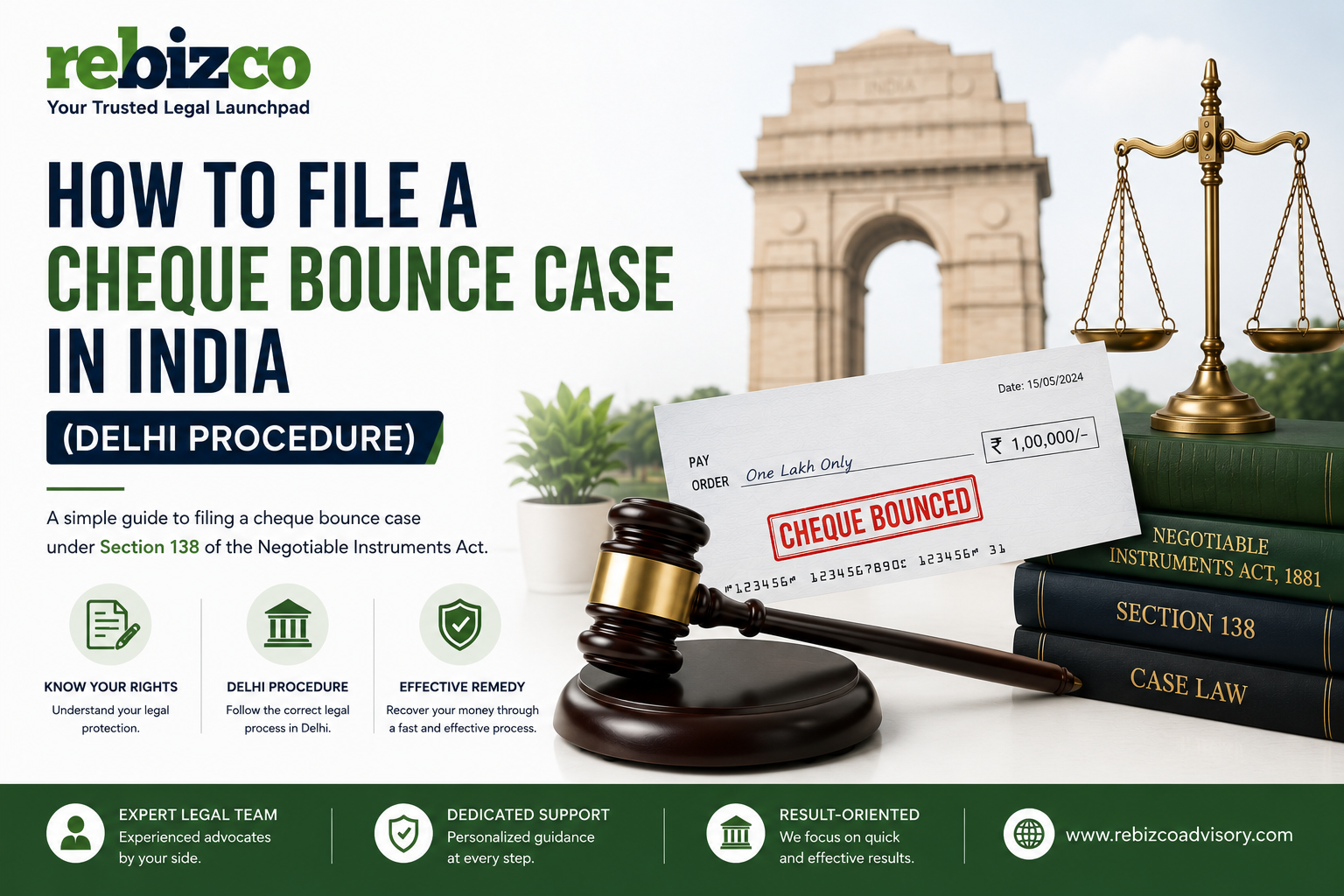
Introduction
A cheque bounce can create serious financial and legal problems. However, Indian law provides a clear remedy to recover your money. If you want to file cheque bounce case India, you must follow a defined legal process under the Negotiable Instruments Act. This guide explains the Delhi procedure in a simple and easy-to-understand format so that families, individuals, and businesses can take the right steps without confusion.
What is a Cheque Bounce Case?
A cheque bounce occurs when a bank refuses to honor a cheque. This usually happens due to insufficient funds, signature mismatch, or account closure. In such situations, the law protects the payee and allows legal action against the drawer.
Under Section 138 of the Negotiable Instruments Act, cheque dishonour is treated as a criminal offence. Therefore, if someone issues a cheque that bounces, the affected person can approach the court for justice and compensation.
Legal Basis Under Section 138
The law governing cheque bounce cases is section 138 filing India, which sets clear conditions before filing a case. First, the cheque must be presented within its validity period. Next, the bank must return it unpaid. After that, the payee must send a legal notice within 30 days. Finally, if the drawer fails to make payment within 15 days, the complainant can file a case.
These steps are mandatory. If you skip any requirement, your case may be rejected. Therefore, following the correct legal process is essential.
Step-by-Step Procedure to File the Case
Cheque Dishonour by Bank
The process begins when the bank returns the cheque with a written reason. This document, known as the return memo, is crucial evidence. Without it, you cannot move forward legally.
Sending Legal Notice
After dishonour, you must send a legal notice within 30 days. This notice demands payment of the cheque amount. Many people prefer consulting a cheque bounce lawyer Delhi at this stage because a properly drafted notice increases the chances of recovery.
Waiting Period After Notice
Once the notice is delivered, the law gives the drawer 15 days to make payment. During this time, the dispute can be resolved without going to court. However, if the drawer ignores the notice, you can proceed with legal action.
Filing the Complaint in Court
If no payment is made, you can file a case before the Magistrate Court. This step is called cheque bounce complaint Delhi, and it must be done within 30 days after the notice period ends. Filing within the time limit is very important, as delays may weaken your case.
Court Process and Hearings
After filing, the court reviews the complaint and issues summons to the accused. The case then moves through hearings, evidence submission, and arguments. The court process cheque bounce may take time, but courts often aim for faster resolution in such matters.
Documents Required for Filing
To file a strong case, you need proper documentation. Essential documents include the original cheque, bank return memo, copy of legal notice, proof of delivery, and a formal complaint.
Accurate documents support your claim and help the court understand the case clearly. Therefore, always keep copies of all financial transactions and communications.
Timeline of the Case
Cheque bounce cases usually follow a structured timeline. Filing and initial hearings may take a few weeks. However, the final judgment can take several months or even longer depending on the case complexity.
In Delhi, courts are relatively efficient, but delays may still occur due to workload or procedural requirements. Therefore, patience and consistency are important.
Penalties and Legal Consequences
If the accused is found guilty, the court may impose imprisonment for up to two years. Additionally, the court can order a fine up to twice the cheque amount. In many cases, compensation is also granted to the complainant.
These strict penalties show that cheque dishonour is taken seriously under Indian law. Hence, individuals and businesses must handle financial transactions responsibly.
Role of Legal Assistance
Although you can file a case yourself, professional legal help can make a big difference. Lawyers ensure that documents are correct, deadlines are met, and arguments are presented effectively. Especially in complex cases, legal guidance improves your chances of success.
Practical Tips for Success
To handle cheque bounce issues effectively, always keep transaction records and avoid informal agreements. Send legal notices on time and respond quickly to any communication. Moreover, attending court hearings regularly ensures that your case progresses smoothly.
Conclusion
Filing a cheque bounce case in India involves clear legal steps. From sending a notice to attending court hearings, each stage plays a vital role in securing justice. By following the proper procedure and maintaining accurate documents, you can recover your money without unnecessary complications.
If you face cheque dishonour, act quickly and follow the law carefully. With the right approach, you can resolve the dispute efficiently and protect your financial interests.