


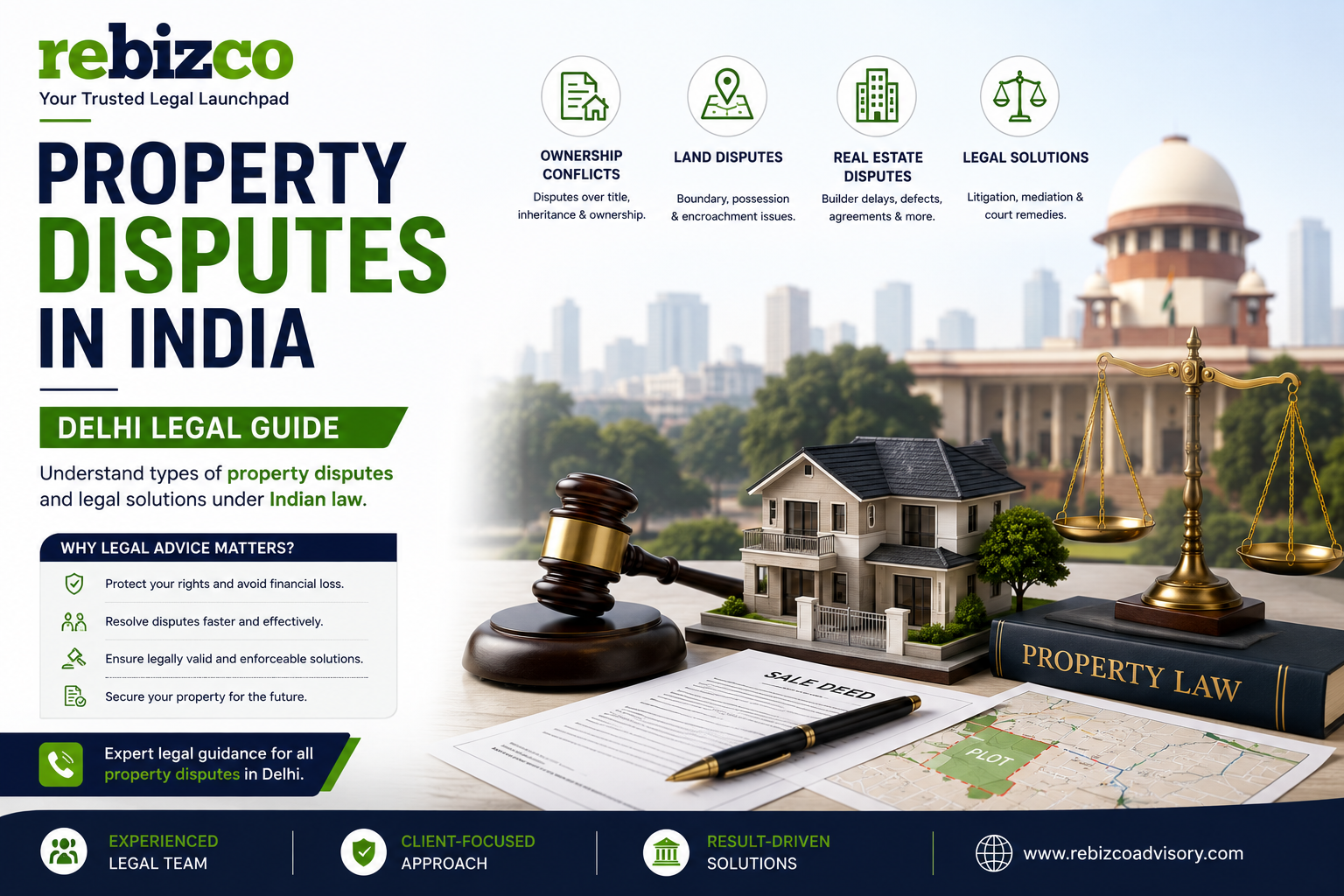
Property disputes are one of the most common legal issues in India, particularly in cities like Delhi where property ownership, inheritance, and real estate transactions are often complex. A dispute can arise over ownership, possession, or usage rights, and resolving it requires a clear understanding of the applicable laws. This guide explains the major types of disputes and the legal remedies available under property dispute India law in a simple and practical manner.
Understanding Property Disputes in India
A property dispute occurs when two or more parties claim rights over the same property. These disputes may involve residential, commercial, or agricultural land. In Delhi, such matters are primarily handled by civil courts and are governed by laws like the Transfer of Property Act and the Indian Succession Act. Most civil property cases India involve document verification, ownership claims, and enforcement of legal rights.
Common Types of Property Disputes
Ownership Disputes
Ownership disputes arise when there is confusion or conflict regarding the legal owner of a property. This often happens due to unclear titles, forged documents, or improper registration. Courts examine sale deeds, title records, and registration details to determine rightful ownership.
Family and Inheritance Disputes
Disputes within families are very common, especially when property is inherited without a clear will. Conflicts may arise between siblings or legal heirs regarding division or usage of property. These cases often require partition suits or settlement through mutual agreement.
Land and Boundary Disputes
Land disputes occur when there is illegal encroachment or disagreement over property boundaries. These cases usually require land surveys, revenue records, and legal intervention. Many people seek a land dispute India solution through courts when such matters cannot be resolved amicably.
Builder-Buyer Disputes
With the rapid growth of real estate in Delhi, disputes between builders and buyers have increased. Issues such as delayed possession, false promises, or poor construction quality are common. These fall under real estate dispute India and can also be taken to RERA authorities for faster resolution.
Tenant and Landlord Disputes
Conflicts between tenants and landlords usually involve rent issues, eviction, or violation of lease agreements. Delhi has specific rent laws that regulate such disputes and provide legal remedies for both parties.
Legal Solutions for Property Disputes
Resolving a property dispute requires choosing the right legal approach. The most common solution is filing a civil case in the appropriate court. Depending on the issue, this may include a suit for ownership declaration, possession, injunction, or partition. A skilled property case Delhi lawyer can help you understand which remedy is most suitable for your situation.
Apart from litigation, mediation is also encouraged in many cases, especially family disputes. It helps parties reach a settlement without long court proceedings. In builder-related matters, filing a complaint under RERA can provide quicker relief. If fraud or forgery is involved, criminal proceedings may also be initiated along with civil action.
Steps to Handle a Property Dispute
If you are facing a property dispute, it is important to act carefully and in a structured manner. You should begin by verifying all property documents, including title deeds and registration records. Consulting an experienced lawyer is essential to understand your legal position. Sending a legal notice to the opposite party is often the first formal step. If the matter is not resolved, filing a civil suit becomes necessary. Early action can significantly improve your chances of success.
Benefits of Taking Legal Action
Taking proper legal action in property disputes offers several advantages:
- It protects your ownership and legal rights
- It helps recover possession of property
- It prevents illegal use or encroachment
- It ensures a legally binding resolution
- It reduces the risk of future disputes
Importance of Documentation
In any property dispute, documentation plays a crucial role. Courts rely heavily on written evidence to determine ownership and rights. Essential documents include sale deeds, tax receipts, encumbrance certificates, and previous ownership records. Strong documentation can make a significant difference in the outcome of civil property cases India.
Role of a Property Lawyer in Delhi
An experienced property case Delhi lawyer helps you navigate the complexities of property law. From examining documents to representing you in court, a lawyer ensures that your case is handled professionally. They also assist in drafting legal notices, filing petitions, and negotiating settlements when possible.
Conclusion
Property disputes in India, especially in Delhi, can be complex and time-consuming. However, understanding your rights under property dispute India law and taking timely legal action can help you resolve conflicts effectively. Whether you are dealing with ownership issues, inheritance conflicts, or a real estate dispute India, proper legal guidance is essential. Seeking a reliable land dispute India solution ensures that your interests are protected and your case is handled efficiently.