


Introduction
Cheque bounce disputes are common in India, but not every case needs to go through a long court trial. In many situations, parties choose settlement to resolve the issue quickly and efficiently. The concept of cheque bounce settlement India allows both parties to avoid lengthy litigation and reach a mutually agreed solution. This guide explains the legal process, benefits, and validity of settling cheque bounce cases in simple terms.
What is Settlement in Cheque Bounce Cases?
Settlement means resolving the dispute between the complainant and the accused without continuing the full court trial. Instead of waiting for a final judgment, both parties agree on payment terms or compensation.
Under the law, cheque bounce cases can be settled at any stage. Whether the case is at the notice stage or already in court, settlement remains a valid option. Therefore, it is often preferred by individuals and businesses looking for faster resolution.
Legal Provision for Settlement
The law allows settlement through a concept known as compounding cheque case India. Compounding means that the complainant agrees to withdraw the case after receiving payment or compensation.
Courts in India actively encourage settlement in cheque bounce matters. In fact, higher courts have emphasized that such cases should be resolved amicably whenever possible. This approach reduces the burden on courts and saves time for both parties.
Settlement Process Step-by-Step
Initial Discussion Between Parties
The process usually begins with communication between the complainant and the accused. Both sides discuss the outstanding amount, payment terms, and possible compromise. This step is crucial because mutual agreement forms the basis of settlement.
Drafting the Settlement Agreement
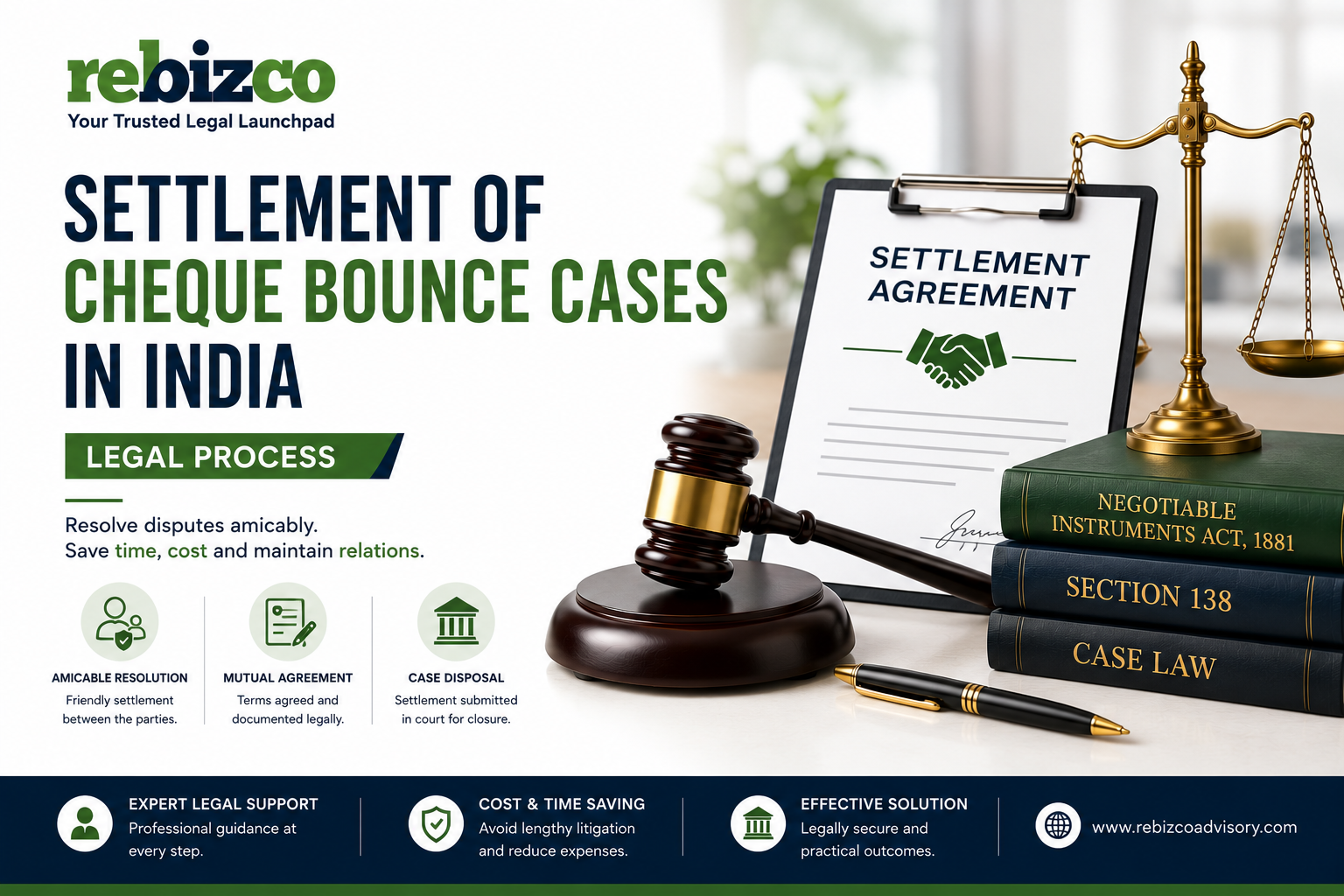
Once both parties agree, they prepare a written settlement agreement. This document clearly states the payment terms, deadlines, and conditions for closing the case. A properly drafted agreement ensures that there are no future disputes.
Filing Settlement in Court
If the case is already in court, the parties must inform the judge about the settlement. The court then records the agreement and allows compounding of the offence. This step is part of out of court settlement NI Act, even though it may be formally recorded in court.
Closure of the Case
After the court accepts the settlement, the case is closed. The accused is relieved from further legal proceedings, and the complainant receives the agreed compensation. This final step ensures legal closure and prevents future litigation on the same issue.
Legal Validity of Settlement
Settlement in cheque bounce cases is legally valid and recognized by Indian courts. Once the court records the compromise, it becomes binding on both parties.
However, the settlement must be voluntary and free from coercion. Courts verify that both parties have agreed willingly. Therefore, proper documentation and legal guidance are important to ensure validity.
Benefits of Settlement
Faster Resolution
Settlement saves significant time compared to court trials. Instead of waiting for years, parties can resolve disputes within weeks or months.
Cost-Effective Solution
Legal proceedings can be expensive. Settlement reduces legal fees, court costs, and other expenses. As a result, it becomes a practical choice for many individuals.
Reduced Stress
Court cases can be stressful and time-consuming. Settlement offers a simpler and more peaceful resolution, helping both parties move forward.
Flexibility in Terms
Unlike court judgments, settlements allow flexible payment terms. Parties can agree on installments, reduced amounts, or extended deadlines based on mutual convenience.
Role of Lawyers in Settlement
Although settlement is a mutual process, legal guidance is very helpful. Lawyers ensure that the agreement is properly drafted and legally sound. They also help in negotiating fair terms and presenting the settlement before the court.
In many cases, professional advice prevents mistakes and protects the interests of both parties.
Common Scenarios for Settlement
Settlement is common in cases where both parties want to avoid litigation. For example, business disputes, personal loans, and friendly transactions often lead to compromise.
In such cases, cheque dispute resolution India becomes easier through mutual understanding rather than strict legal action.
Important Points to Remember
While settlement is beneficial, certain precautions are necessary. Always ensure that the agreement is in writing and signed by both parties. Keep proof of payment and follow the agreed timeline strictly.
Additionally, never rely on verbal promises. Written agreements provide legal security and prevent future conflicts.
Challenges in Settlement
Sometimes, parties may disagree on the settlement amount or terms. In such situations, negotiation becomes difficult. Moreover, if one party fails to honor the agreement, the dispute may continue in court.
Therefore, clarity and trust are essential for successful settlement.
Conclusion
Settlement of cheque bounce cases in India offers a practical and efficient alternative to lengthy court proceedings. With the support of legal provisions, parties can resolve disputes quickly and reduce financial and emotional burden.
By choosing settlement, you not only save time and cost but also maintain better relationships. If handled correctly, it ensures a smooth and legally valid resolution for both sides.