


Property disputes within families are quite common in India, especially when multiple members claim rights over the same asset. Understanding partition property India law helps families handle such situations smoothly. A clear understanding of legal rights and procedures can prevent long-term conflicts and ensure fair distribution.
What is Property Partition?
Property partition refers to the legal division of jointly owned property among co-owners or family members. After partition, each individual gains full ownership of their respective share. They can then sell, transfer, or use it without needing consent from others.
This concept is very important in family property division India, particularly in joint families where assets are shared across generations.
Types of Property in India
Understanding the nature of property is essential before starting the partition process.
Ancestral Property:
Ancestral property passes down through generations. Every legal heir has a birthright in it. Issues related to ancestral property India partition often lead to disputes.
Self-Acquired Property:
An individual purchases or earns this property independently. The owner has complete control over it and can decide whether to divide it.
Joint Family Property:
Family members collectively own this type of property. It often becomes the subject of partition when disagreements arise.
Who Can Claim a Share?
Several individuals have legal rights to claim partition:
- Sons and daughters (including married daughters)
- Legal heirs of deceased family members
- Coparceners in Hindu Undivided Family (HUF)
- Co-owners of jointly purchased property
The law now grants equal rights to daughters, making property division more balanced.
Modes of Property Partition
Families can divide property in two main ways.
Mutual Agreement:
Family members agree on how to divide the property. They record the agreement in writing. This method saves time, money, and relationships.
Court Partition:
When disagreements arise, a family member files a case in court. This situation is common in property dispute family India cases.
Legal Process for Property Partition
The legal process involves several steps.
First, a co-owner files a partition suit in a civil court. The court then examines ownership details and verifies all claims. After that, it issues a preliminary decree that defines each person’s share. Later, the court passes a final decree that divides the property physically or orders its sale. Finally, authorities execute the decree and transfer ownership accordingly.
This process plays a key role in legal partition Delhi India and across the country.
Documents Required
Proper documentation makes the process smoother. You typically need:
- Property ownership documents
- Identity proofs of all parties
- Legal heir certificate or family tree
- Title deeds
- Any previous agreements
Accurate records help avoid unnecessary delays and disputes.
Laws Governing Property Partition
Several laws regulate property division in India. These laws define rights and procedures clearly.
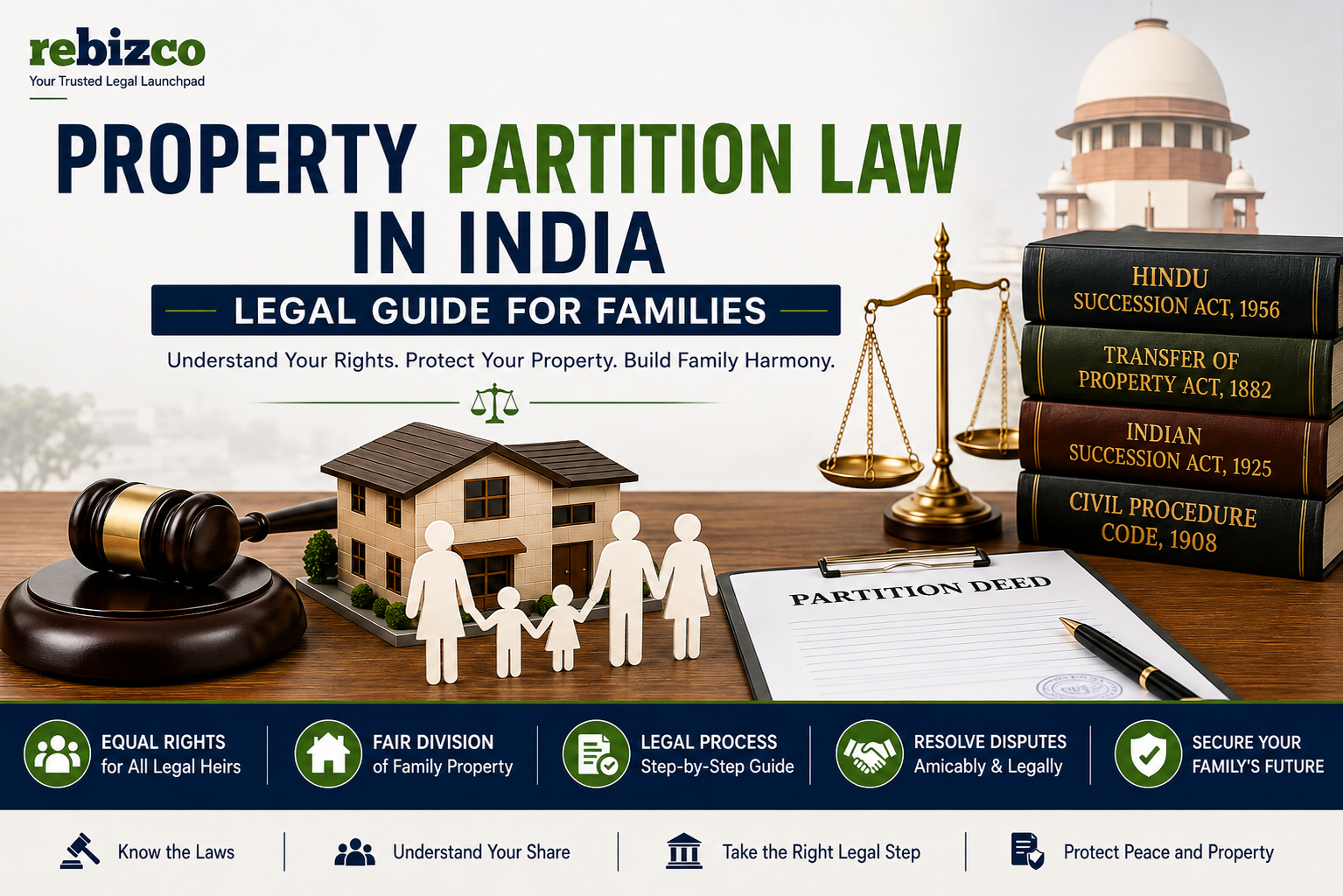
- Hindu Succession Act, 1956
- Indian Succession Act, 1925
- Transfer of Property Act, 1882
- Civil Procedure Code, 1908
Understanding these laws strengthens your position in any dispute.
Key Legal Considerations
Certain factors play an important role in property partition.
Daughters have equal rights in ancestral property. Written agreements hold more value than oral ones. Stamp duty and registration rules vary by state. Courts may order the sale of property if physical division is not possible.
Common Challenges
Families often face several issues during partition. Disputes over ownership shares create tension. Missing documents slow down the process. Emotional conflicts make agreements difficult. Court cases may take time to resolve.
Understanding these challenges helps families prepare better.
Tips to Avoid Disputes
Families can avoid conflicts by planning early. Create a clear will to define ownership. Choose mutual settlement whenever possible. Maintain proper records of all assets. Seek legal advice before making decisions.
Conclusion
Property partition plays a crucial role in managing family assets in India. Whether it involves family property division India or resolving ancestral property India partition issues, knowing the legal process is essential. A well-informed approach helps families avoid disputes and ensures fair distribution of property.