


Introduction
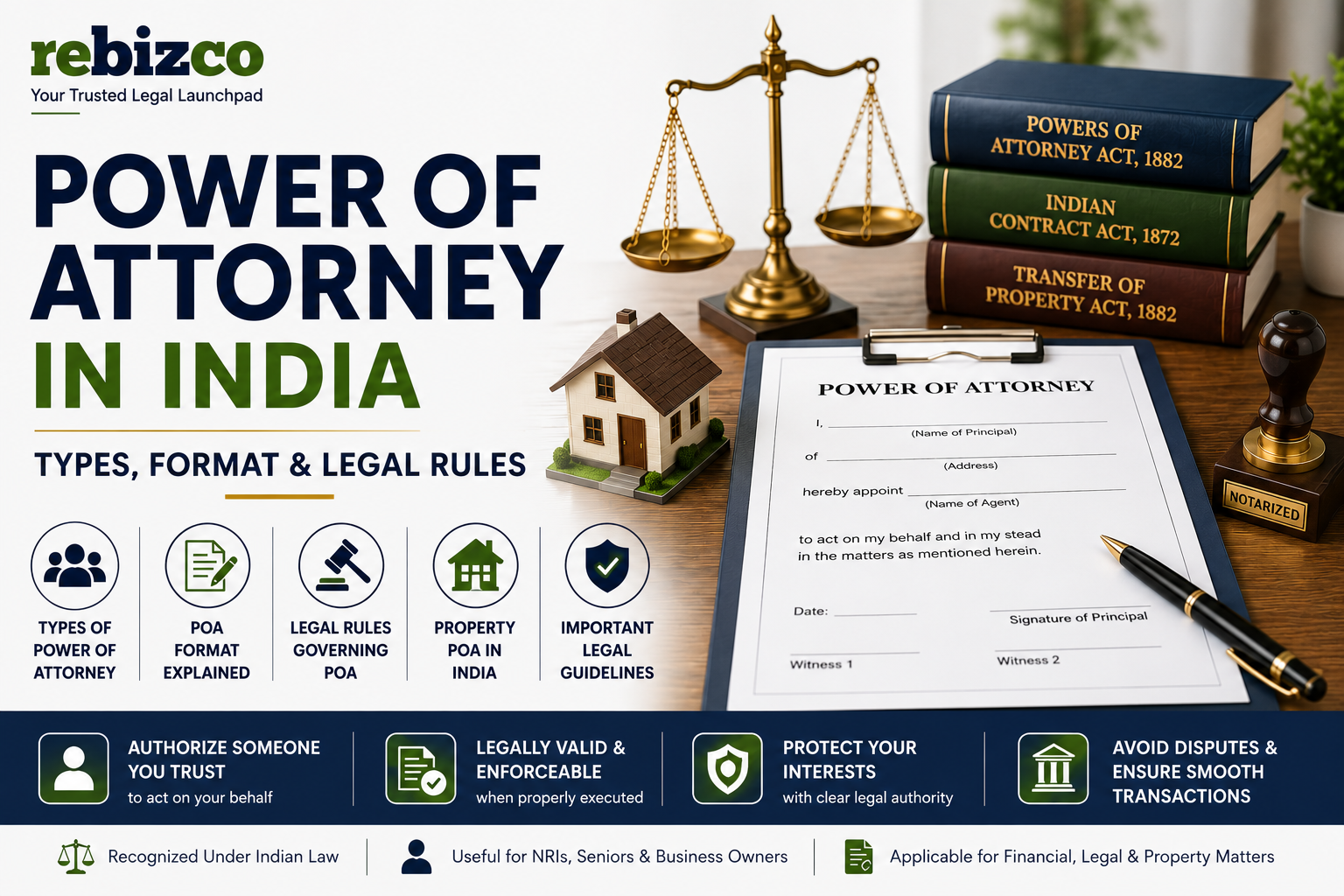
A Power of Attorney (POA) is a crucial legal document that allows one person (the principal) to authorize another person (the agent or attorney) to act on their behalf in legal, financial, or property-related matters. In India, POA plays an important role, especially when individuals cannot be physically present to manage their affairs due to travel, health issues, or other commitments. Understanding power of attorney India types, format, and legal rules is essential to avoid misuse and ensure validity under Indian law.
What is Power of Attorney in India?
A Power of Attorney is governed primarily by the Powers of Attorney Act, 1882, and other relevant laws depending on the nature of authority granted. It enables the agent to make decisions, sign documents, and perform acts legally binding on behalf of the principal. Many people use property POA India for buying, selling, or managing real estate, especially in cities like Delhi where property transactions often require representation.
Types of Power of Attorney in India
There are different types of POA based on the scope and purpose of authority granted.
General Power of Attorney (GPA) allows the agent to perform a wide range of activities, such as managing bank accounts, handling business transactions, and dealing with property matters. It is commonly used when the principal wants to give broad powers to a trusted individual.
Special Power of Attorney (SPA), on the other hand, is limited to a specific task or transaction. For example, it may authorize someone to sell a particular property or represent the principal in court for a single case. Understanding general vs special POA India is important because misuse risks are higher in GPA due to its broader scope.
Power of Attorney Format in India
The POA Delhi format or general format across India must include key details to ensure legal validity. It should clearly mention the name, age, and address of both the principal and the agent. The document must define the powers granted in clear and specific terms to avoid ambiguity. It should also mention the duration of the POA, whether it is revocable or irrevocable, and the purpose for which it is created.
The document must be signed by the principal and attested by at least two witnesses. In many cases, especially for property-related matters, notarization or registration is required. Registration is mandatory when the POA involves immovable property transactions.
Legal Rules Governing Power of Attorney in India
Several legal POA rules India must be followed to ensure the document is valid and enforceable. First, the principal must be of sound mind and legally competent to grant authority. Second, the agent must act in the best interest of the principal and within the powers granted.
In property matters, the Supreme Court of India has clarified that property ownership cannot be transferred solely through GPA. A registered sale deed is necessary for ownership transfer. This makes it important to use POA carefully in real estate transactions.
Additionally, POA can be revoked at any time by the principal unless it is irrevocable. Revocation must be communicated clearly and, in some cases, registered to avoid disputes.
Importance of Power of Attorney in Property Matters
The use of property POA India is very common in real estate transactions. For instance, NRIs often appoint a trusted person in India to manage, sell, or lease their property. However, due to past misuse, authorities have tightened regulations to ensure transparency and legality.
A properly drafted and registered POA helps avoid legal disputes, ensures smooth transactions, and protects the interests of both parties. It is always advisable to consult a legal expert before executing a POA for property-related purposes.
Common Mistakes to Avoid
Many people make mistakes while creating a POA, such as granting overly broad powers without proper safeguards, not registering the document when required, or failing to clearly define the agent’s authority. Another common issue is not revoking an old POA, which can lead to misuse.
Ensuring proper documentation, legal compliance, and clarity in drafting can help avoid these problems and make the POA legally strong.
Conclusion
Power of Attorney is a powerful legal tool that simplifies decision-making and representation in India. However, it must be used carefully, with a clear understanding of its types, format, and legal rules. Whether you are dealing with financial matters or property transactions, knowing the nuances of POA can help you protect your interests and avoid disputes. Always ensure that your POA is properly drafted, legally compliant, and executed with full awareness of its implications.