

The Employees’ State Insurance Scheme, commonly known as ESIC, provides social security and healthcare benefits to eligible employees and their families. The scheme supports workers during sickness, maternity, employment injuries, and other situations covered by the law.
Many employees know ESIC mainly because they see an ESIC deduction on their salary slip. However, ESIC offers much more than a monthly contribution. Eligible employees can access medical treatment and several cash benefits under the scheme.
Understanding ESIC benefits India eligibility can help employees know when they can use ESIC services and what support they may receive.
What Is ESIC?
The Employees’ State Insurance Corporation, or ESIC, administers the Employees’ State Insurance Scheme under the Employees’ State Insurance Act, 1948.
The scheme provides medical and financial protection to insured employees and eligible family members. It covers several risks associated with sickness, maternity, employment injuries, and related circumstances.
The scheme works through contributions from employers and employees. ESIC uses these contributions to provide benefits to eligible insured persons.
Who Is Covered Under ESIC?
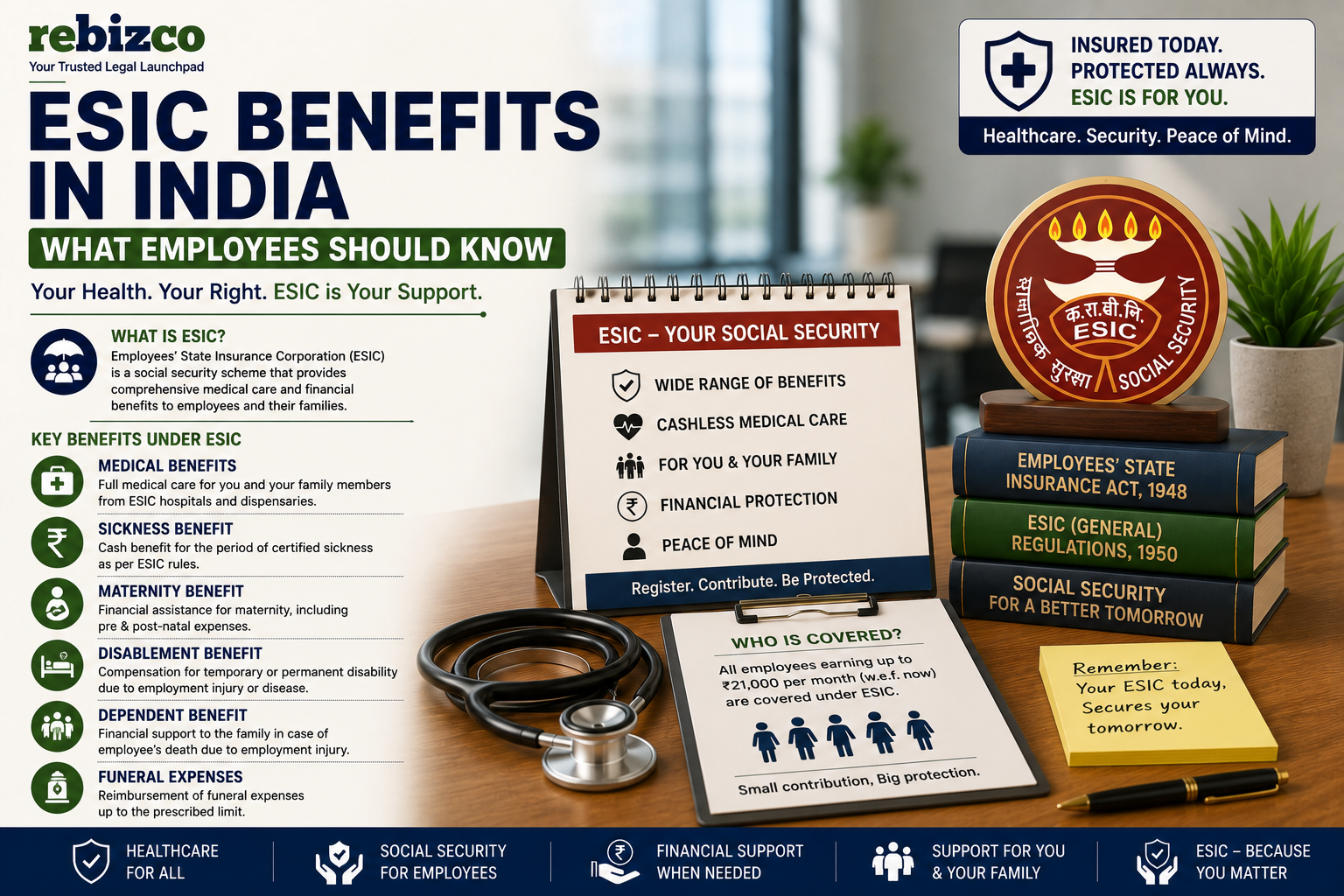
ESIC coverage generally applies to employees working in covered establishments and earning wages within the prescribed limit.
The coverage rules depend on the nature of the establishment, the applicable geographical area, and the employee’s wages.
Employees should not assume that every company automatically comes under ESIC. They should check whether their establishment falls within the coverage requirements.
The wage ceiling can also change through government notifications. Employees should therefore check the latest ESIC requirements when determining eligibility.
ESIC Benefits India Eligibility
The ESIC benefits India eligibility depends on whether the employee qualifies as an insured person under the scheme.
An employee generally needs to work in a covered establishment and fall within the applicable wage limit.
Once covered, the employee can access benefits according to the applicable contribution and eligibility conditions.
The employee’s family members may also qualify for certain medical benefits.
What Benefits Does ESIC Provide?
ESIC provides several types of benefits to insured persons.
The major benefits include medical treatment, sickness benefit, maternity benefit, disablement benefit, dependants’ benefit, and funeral expenses.
The scheme can also provide rehabilitation and other support in specific circumstances.
The type and amount of benefit depend on the employee’s situation and the applicable ESIC rules.
ESIC Medical Benefits
Medical care is one of the most important benefits under ESIC.
An insured person and eligible family members can receive medical services through ESIC facilities and other authorised arrangements.
Medical benefits can include consultation, medicines, diagnostic services, hospitalisation, and specialist treatment, depending on the applicable facilities.
This benefit can reduce the financial burden of medical treatment for covered employees.
ESIC Hospital Benefits India
Employees searching for ESIC hospital benefits India should understand that ESIC operates a network of hospitals, dispensaries, and medical facilities.
An insured person can receive treatment through the facilities available under the ESIC system.
The availability of a particular specialist, hospital, or service can depend on the employee’s location and ESIC arrangements.
Employees should check their designated ESIC medical facility before seeking treatment.
Sickness Benefit Under ESIC
ESIC provides cash support to eligible insured employees during periods of certified sickness.
The employee must satisfy the applicable contribution conditions and follow the required medical certification process.
The amount and duration of sickness benefit depend on the applicable ESIC rules.
Employees should obtain the required medical documents and submit them through the prescribed process.
Extended Sickness Benefit
Certain long-term or specified diseases may qualify for extended sickness benefit.
The benefit applies only when the employee meets the prescribed conditions.
ESIC identifies specific diseases and contribution requirements for this benefit.
Employees dealing with a prolonged illness should contact their ESIC medical or administrative office to understand whether they qualify.
Enhanced Sickness Benefit
ESIC also provides enhanced sickness benefit in certain situations.
This benefit can apply to insured persons who undergo sterilisation procedures and meet the relevant conditions.
The benefit period and payment depend on the applicable ESIC provisions.
Employees should confirm the current requirements with ESIC before making a claim.
Maternity Benefit Under ESIC
ESIC provides maternity benefits to eligible insured women.
The benefit can provide financial support during maternity leave and certain pregnancy-related situations.
Eligibility depends on the employee’s contribution record and the applicable rules.
Maternity-related medical services can also form part of the healthcare support available through ESIC.
ESIC Benefits for Employment Injury
An employee who suffers an employment injury may qualify for disablement benefits under ESIC.
The injury must generally have a connection with employment and meet the requirements of the applicable law.
The benefit can provide financial support when an employment injury affects the employee’s ability to work.
The nature and extent of disablement can affect the benefit available.
Temporary Disablement Benefit
Temporary disablement can occur when an employment injury prevents an employee from working for a limited period.
An eligible insured person can receive a cash benefit according to the applicable ESIC provisions.
The employee should report the employment injury promptly and obtain the necessary medical certification.
Permanent Disablement Benefit
A serious employment injury can sometimes result in permanent disablement.
ESIC can provide permanent disablement benefit when the employee meets the applicable conditions.
The amount can depend on the degree of loss of earning capacity assessed under the ESIC framework.
Employees should keep medical records and employment-injury documents for their claim.
Dependants’ Benefit
If an insured employee dies because of an employment injury, eligible dependants may receive financial support under ESIC.
This benefit can help protect the employee’s family after a serious workplace accident.
The amount and eligibility depend on the applicable legal provisions.
Family members should maintain the employee’s ESIC and employment documents when making a claim.
Funeral Expenses Under ESIC
ESIC can provide funeral expenses when an insured person dies, subject to the applicable conditions and prescribed amount.
The benefit helps provide financial support to the family during an extremely difficult period.
The eligible person should submit the required documents within the prescribed procedure.
ESIC Coverage India
ESIC coverage India depends on the establishment, employee category, wage limit, and applicable geographical coverage.
An employer must register eligible employees under ESIC when the establishment falls within the scheme’s coverage.
Employees should check their ESIC insurance number and contribution details.
If an eligible employee does not receive ESIC coverage, the employee can ask the employer for clarification.
How Does ESIC Contribution Work?
ESIC operates through contributions from employers and employees.
The employee contributes a prescribed percentage of wages, while the employer contributes a larger share according to the applicable ESIC contribution rate.
The contribution rates can change through official notifications.
Employees can check their salary slips and ESIC records to confirm that contributions appear correctly.
What Is an ESIC Insurance Number?
An insured person receives an insurance number under the ESIC system.
This number helps ESIC maintain the employee’s records and benefits.
Employees should keep their insurance number safely and provide accurate information when accessing ESIC services.
The number generally remains important even when an employee changes jobs covered under ESIC.
Can Family Members Use ESIC Benefits?
Yes, eligible family members can receive certain ESIC medical benefits.
The definition of family and the eligibility conditions follow the applicable ESIC rules.
Employees should make sure their family details are correctly recorded with ESIC.
Keeping these records updated can make it easier for family members to access healthcare services when needed.
ESIC Claim Process Delhi
Employees in Delhi can use the ESIC system to access eligible medical and cash benefits.
The ESIC claim process Delhi can vary depending on the type of benefit.
Medical benefits generally involve visiting the designated ESIC facility, while cash benefits may require medical certificates, contribution records, and other documents.
Employees should follow the procedure prescribed for the particular claim rather than using the same process for every ESIC benefit.
Steps to Make an ESIC Claim
- Check your eligibility: Confirm that your ESIC coverage and contribution requirements are satisfied.
- Identify the benefit: Determine whether your claim involves sickness, maternity, employment injury, disablement, or another benefit.
- Visit the authorised facility: Go to the relevant ESIC dispensary, hospital, or medical facility when medical treatment is required.
- Collect documents: Keep your insurance number, medical records, certificates, and employment details ready.
- Submit the claim: Follow the prescribed ESIC process for the particular benefit.
- Check your records: Confirm that your contribution and employment details appear correctly.
- Track the claim: Follow up with the relevant ESIC office if the benefit does not process as expected.
- Raise a grievance: Use the appropriate ESIC grievance mechanism if you face an unresolved issue.
What Documents Are Needed for ESIC Claims?
The documents depend on the type of benefit.
An employee may need an ESIC insurance number, identity details, medical records, certificates, employment information, and bank details.
An employment injury claim may require additional documents related to the accident.
Maternity claims may require medical certificates and other prescribed records.
Employees should check the current ESIC requirements before submitting documents.
What If an Employer Does Not Register an Eligible Employee?
An employee who believes they qualify for ESIC but does not receive coverage should first ask the employer for an explanation.
The employee should check salary slips and employment records.
If the employer fails to comply with applicable ESIC requirements, the employee can approach the relevant ESIC authority or grievance mechanism.
Keeping salary slips and appointment documents can help establish the employment relationship.
What If ESIC Contributions Are Not Deposited?
Employees may discover that ESIC deductions appear on their salary slips but their contribution records do not show the expected information.
In such cases, employees should keep copies of salary slips and contribution records.
They can ask the employer to correct the issue and can approach ESIC if the problem remains unresolved.
Employees should not ignore unexplained deductions from salary.
ESIC and Employment Injury Claims
Employment injuries require timely reporting.
An employee should inform the employer about the workplace accident as soon as possible.
The employer and employee should follow the applicable ESIC reporting process.
Medical records, accident details, witness information, and employment documents can help establish the circumstances of the injury.
Prompt reporting can reduce unnecessary complications.
ESIC Benefits After Leaving a Job
ESIC benefits do not always stop immediately when an employee leaves employment.
The availability of certain benefits depends on the employee’s contribution record and the specific circumstances.
Employees who leave a job should check their ESIC status and any continuing entitlement before assuming that all benefits have ended.
ESIC for Family Members
Family healthcare is an important part of the ESIC system.
Eligible dependants may receive medical treatment under the applicable provisions.
Employees should ensure that family details remain updated.
This can help prevent administrative difficulties when a family member needs treatment.
ESIC vs Private Health Insurance
ESIC and private health insurance work differently.
ESIC is a statutory social-security scheme for eligible employees. Private insurance works through an insurance policy purchased from an insurer.
An employee covered by ESIC should understand the benefits available through ESIC even if they also have private health insurance.
Both forms of healthcare protection can serve different purposes.
Benefits of ESIC for Employees
ESIC can provide valuable protection to eligible employees and their families.
Key Benefits
- Medical care: Eligible employees and family members can access healthcare through the ESIC system.
- Income support: Cash benefits can help during qualifying sickness or other situations.
- Maternity support: Eligible insured women can receive maternity benefits.
- Employment injury protection: Employees can receive benefits after qualifying workplace injuries.
- Family protection: Dependants may receive support in certain circumstances.
- Funeral assistance: ESIC can provide funeral expenses according to the applicable rules.
Common ESIC Problems Employees Face
Employees may face issues such as incorrect personal information, missing contributions, problems with insurance numbers, rejected claims, or difficulty accessing medical facilities.
The first step should involve checking the employee’s ESIC records.
Employees should also ask the employer to correct employment or contribution information when necessary.
If the issue remains unresolved, the employee can approach ESIC through the appropriate grievance process.
How Employees Can Protect Their ESIC Rights
Employees should regularly check their salary slips and ESIC details.
Keep copies of employment documents and medical records.
Report workplace injuries promptly.
Make sure family information remains updated.
If an employer deducts ESIC contributions but fails to maintain proper records, raise the issue quickly.
Taking these simple steps can make it easier to resolve problems later.
Conclusion
ESIC provides important healthcare and social-security protection to eligible employees in India. The scheme can support employees during sickness, maternity, employment injuries, disablement, and other qualifying situations.
Understanding ESIC benefits India eligibility can help employees determine whether they qualify and which benefits they can access.
Employees should also understand employee state insurance India rules, including coverage requirements, contribution conditions, and claim procedures.
For healthcare support, ESIC hospital benefits India can provide access to medical facilities for eligible insured persons and their families.
Employees facing administrative problems can follow the ESIC claim process Delhi or the applicable process in their location and raise a grievance when necessary.
Finally, ESIC coverage India depends on the applicable legal requirements. Employees should check their employment status, wage level, establishment coverage, and ESIC records rather than assuming that every worker receives the same benefits.
If you believe your employer has failed to provide eligible ESIC coverage or you face a disputed claim, keep your employment and salary records and seek professional advice where necessary.